
Foreknowledge Does Not Destroy Free Will

One of the most common arguments against the existence of human free will is an appeal to God's foreknowledge. If God already knows what I'm going to do, says the argument, then I don't really have a choice. Although this argument seems to have been convincing for a great number of people, it actually is a great example of a non sequitur, an argument in which the conclusion does not follow from the premises. This is because the only premise given is that God foreknows my actions. From this, it certainly does not follow that I do not choose my actions.
A stronger version of the argument would make explicit a premise which is probably a hidden assumption held by anyone making this claim, which is that if anyone foreknows what I will do, then I have no choice. Then, if we add that God foreknows every one of my actions, it does follow that I have no choices at all. But we don't seem to think this hidden premise is really true. Consider a long-married couple. Often, when one member of this couple makes a decision, their spouse will say something along the lines of “I knew you would do that.” If we think that the spouse speaks the truth even on one single occasion, then we must conclude they foreknew what their spouse would do. Necessarily, then, their spouse did not act freely. Does anyone think this is a true conclusion? Probably not, since it seems that the spouse's foreknowledge has no casual relationship to the action.
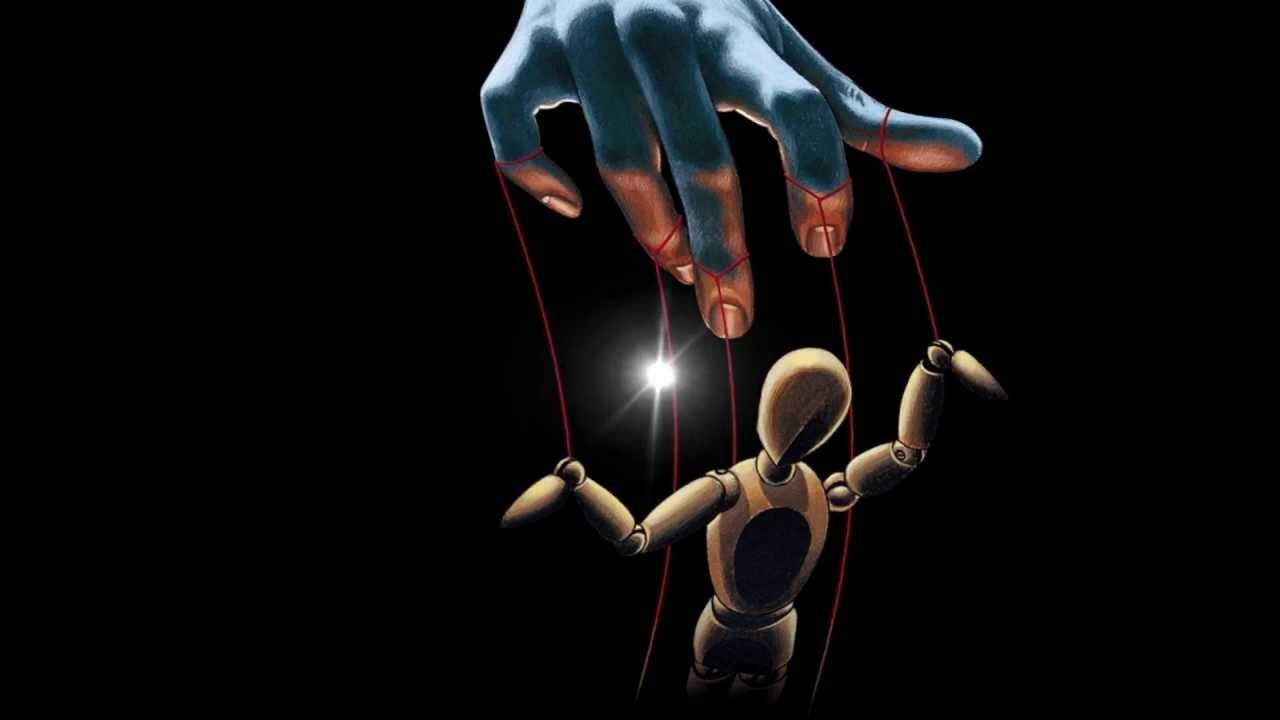
Very well, but one might appeal to God's foreknowledge of all our actions rather than a small subset of them. The new premise might be that if someone foreknows all of my actions, I have no free will. But why should we think this is true? What about the foreknowledge of all future choices, even all future events, causes those future choices and events? Given that the foreknowledge of one choice does not invalidate it as choice, it is difficult to see how the foreknowledge of all choice would invalidate all of them as choice. There is no logical connection here between knowledge and cause, and so the argument remains a non sequitur, it does not follow.
One may attempt to introduce a causal link by appealing to God’s unique role as creator. Since He foreknew everything that would happen, so the argument goes, that means He set it up that way, and hence there is no free will. This argument hides a different false premise. It presumes that a deity who knows the future in its entirety and creates (and even sustains, under classical theology) the universe is incompatible with free will, but we are not given any good reason to think this must be true. Furthermore, an examination of what Christians classically meant by human free will as well as God’s knowledge will lead us to understand that free will and foreknowledge are indeed compatible.
In his book The Consolation of Philosophy, the Christian philosopher, statesman, and martyr Boethius paints a picture of God’s knowledge of history as analogous to that of a man standing upon a tall hill, who can see everything all around him at a glance. Since God is outside of time He, like this man, has a full picture of everything in history all at once. For God, there is no passage of time. Everything that is, was, or will be is eternally present to Him, and thus He knows all things past, present, and future. From this understanding of God’s knowledge, it is clear that His knowledge in no way affects the freedom of man to make moral choices, and Boethius concludes as much.
The classical understanding of human free will, furthermore, is not the same as the modern understanding of “libertarian” free will. Modern notions of free will usually include an ability to choose anything at all under any aspect whatsoever. The classical Christian understanding of human free will, however, has always been that man chooses ends only under the aspect of good. This means that there is some good desired and aimed at even in our evil actions. For example, a man may choose to murder his wife’s affair partner. He does not choose this under the evil aspect of murder, but under the good aspect of justice. He sins because he takes justice into his own hands, and even distorts justice into vengeance, but what he chooses, he chooses because he is aiming at this distorted notion of justice. But, the man in question is certainly free to choose either to murder his wife’s affair partner, or not, and if he chooses not to, he still chooses under the aspect of some good. It could be cowardly: perhaps he believes he will not be successful and refrains in order to preserve his own life - a good. Perhaps he fears the evil of punishment if he is caught; fleeing evil is a good, since evil is the negation of good. Or, he could rightly perceive that justice demands his wife and her affair partner be punished for their infidelity, but also understand that he is not the arbiter of justice. In this case, he refrains from acting because it actually is just to do so. The thing he chooses is still a good.
Thus, if we understand that God’s foreknowledge is not the cause of our actions, since by His omniscience He is aware of all events past, present, and future, and we also understand that free will means we can choose those things which we understand to be good, and not that we can simply choose anything whatsoever, it follows naturally that God may know each and every choice we will make, and yet we do still actually make our choices.
Is there an argument for free will beyond it being innately obvious that we have it?
It feels very much to me like the reliability of the senses. We don't have a strong rational argument for it, but there also isn't any way to deny it without recursion, so here we are.