
Some Thoughts on Obedience
Regarding the recent controversy over two Marian titles

In the Catholic Church, there is a peculiar freedom which is often not understood by those outside of Her walls (and often not even understood by those inside them). That is the freedom to disagree with other Catholics on some very important questions. That is the freedom to hold a theological opinion. Some examples of theological opinion are the question of ensoulment, whether a human person begins to exist at the moment of conception or sometime after, as well as the question of middle knowledge, whether God knows conditional counterfactuals. Catholics in good standing may disagree with one another regarding these questions even when Church teaching might gesture towards one answer being correct, as the dogma of the Immaculate Conception does for the ensoulment debate. Often, one side of a debate over theological opinions will enjoy wide consensus, with Popes and holy bishops supporting it across centuries.
Recently, two Marian titles which are a matter of theological opinion have been the source of controversy and strife among Catholics online. These are the titles of Mediatrix of All Graces and Co-redemptrix. On November 4th, 2025, the Vatican released the document Mater Populi Fidelis, which restricted the public use of these two titles. Traditionalist Catholics, understandably attached to these titles (I personally defended them here prior to this document’s release), have been trying to argue with the Vatican about this restriction by doubling down on their defense of them loudly and in public.
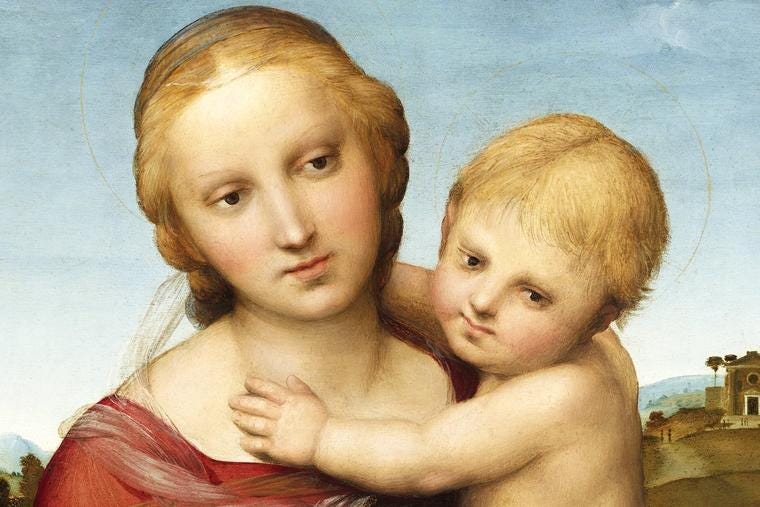
In my opinion, this is a mistake. While I personally was saddened to see that Pope Leo XIV has restricted the use of these titles, since contending with them helped me to grow as a Catholic, I understand why he feels that it is in the best interests of the Church to do so. In the first place, these titles are not dogmatized. They are merely theological opinions, even though they are theological opinions which have been widely held by learned and faithful Catholic saints. This is not, as some have said or at least implied, a reversal of Church teaching. It is certainly not comparable to a hypothetical reversal of some Marian dogma like the dogma of the Immaculate Conception. So, there is not a real risk of scandal in restricting their use.
More importantly, explaining these titles to objectors to the Catholic Faith is sometimes burdensome. Since one need not believe them to be a Catholic in good standing, the insistence of so many Catholics on using them may stand as a stumbling block for those who otherwise might join the faith. This would be a great tragedy! Let us not place such stumbling blocks before our brothers. If eating the meat sacrificed to an idol would cause my brother to stumble, then let me not eat meat!
There is a secondary component to this, as well, which is that a certain spirit of disobedience has taken root in certain traditionalist circles (and I consider myself to be a traditionalist or sorts, though not a “radical” one). The knee-jerk reaction of certain traditionalist speakers and authors in response to these kinds of restrictions from Rome is to immediately denounce them. This is a clear error. It is not, as some on the opposite extreme might think, an error to correct truly erroneous statements of the Pope, nor to “disobey” unjust orders or commands. But, we must be discerning with regard to the subject matter. Virtue would have us err on the side of obedience, and in this case, the subject matter is that of theological opinion. If the Holy See has determined to censure certain theological opinions, then we faithful sons of the Church ought to listen. It does not matter how convinced we are that our theological opinion is correct. We must hasten to obedience because it is one of the greatest virtues in the Christian life.
Our Lord said that we are His friends if we obey His commands. And, He has given us His Holy Church to bind and loose on earth. So, let us be bound or loosed by Her judgment, since She judges according to the revelation He has left for us and with all prudence, and furthermore has our good in mind. The fruits of such obedience in our spiritual lives will be great, and hastening to obedience will merit us a greater share in the rewards of heaven. Remember that it was by obedience to the cross that our Lord won for us our salvation. How, then, can we refuse obedience to our Holy Father?