
The Real Problem with the Protestant Canon
It has little to do with fallibility.

Over the past few years, beginning with a debate between Trent Horn and Gavin Ortlund which was hosted by Matt Fradd, I have noticed a number of Protestants online responding to the Catholic objection to the fact that the Bible does not contain the canon, which is the list of all biblical books, within itself by attacking the notion of infallibility. This question of epistemic certainty was precisely what motivated me to join RCIA 10 years ago and learn more about the Catholic Church. It was my primary motivating factor to leave Lutheranism, and no other Protestant group could give a satisfactory answer. Finally, years later, it seems Ortlund, one of the most brilliant Protestants of our day, took a real stab at it. I've had some time mull over the idea as presented by numerous individuals since that debate, and for a little while it gave me some difficulty. But, in prayer and through recalling my motivations a decade ago, I realized that the canon question was never about infallibility. Lots of Catholics, especially those who have never been serious Protestants, may think infallibility is the key, but it's not. The key is and has always been authority.
By whose authority do we know the canon of Scripture? We should probably all agree that Christians must know all and every book of inspired Scripture with the certainty of faith. Now, the certainty of faith is infallible, but this is because it comes by the theological virtue of faith. However, one who has the theological virtue of faith can still be in intellectual error: he may make a mistake in his reasoning, or may misunderstand the meaning of a doctrine which he holds with the certainty of faith, or he may have been told by others whom he trusts that some teaching is to be held with the certainty of faith when, in fact, it is not. What is at the heart of the virtue of faith, whence comes its certainty, is obedience and submission to the things God has said for a twofold reason. First, the lesser motivation: we adhere to the things God has revealed as true because of the One who has revealed them, since we believe He can neither deceive not be deceived (CCC 156). Second, and most perfectly, we adhere to the things God has revealed because we love Him. “You are my friends, if you do the things that I command you” (John 15:14).
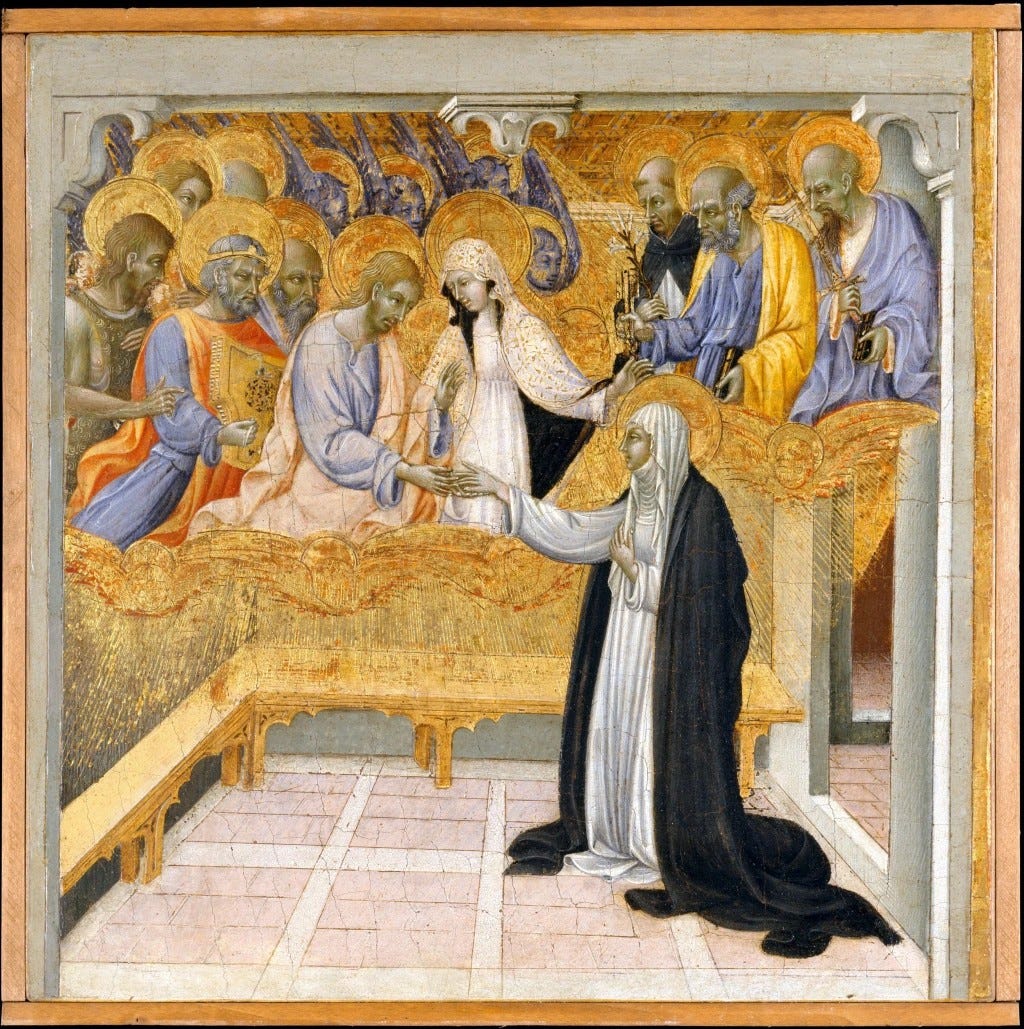
But by what means are we given to know that a thing has been revealed by God? There are a few possible modes. First, God could inspire human authors to record His Word in written form so that future generations may have access to it. Second, God can establish an earthly authority with a heavenly mandate to speak on His behalf, which would have authority to interpret God's written word and to bind the hearts and consciences of the faithful. Lastly, God can reveal something directly to an individual. This occurred in the case of St. Catherine of Siena, who was taught directly by Jesus and by the Saints in mystical visions. The things she was taught did not at all conflict with what Scripture or the Church had taught, but she learned them directly from God by means of special graces. When it comes to knowing the canon of Scripture, if men are to hold the canon with the certainty of faith, then God must reveal it through one of these means.
So, by which means does He reveal it? Well, no book of Scripture lists the canon of Scripture. Everyone agrees on this, so we can eliminate that as a means. This fact presents a problem for the Protestant doctrine of Sola Scriptura, though not an insurmountable one. Since Sola Scriptura means Scripture Alone, and it seems the doctrine of the canon comes from another source, Scripture is not the sole source of doctrines to be held with the certainty of faith. The Protestant may object that Scripture need not be held with the certainty of faith however, and though this is unpalatable for many of us, it does answer the objection. This seems to be Ortlund’s view, taken from RC Sproul. These men hold that Scripture is a fallible list of infallible books. So, they exclude the canon as such from the deposit of faith: it is not known with the certainty of faith.
Now, I do happen to agree with Ortlund that an infallible authority is not needed, strictly speaking, for us to have a canon of Scripture, but I don't think that Scripture can really be a fallible list. It must be a certain list, since an uncertain list will lead the faithful astray. They will either lack something necessary to the faith or will possess something they believe to be of the faith while it in reality is only the word of men. Yet, one could participate in a Church which does not have the charism of infallibility, yet derives its authority from God. If this Church prescribes a canon, then the faithful can practice obedience to God by adhering to that canon, even if that Church happens to have gotten the canon wrong, and the faithful then still have that canon by a kind of certainty of faith. Namely: they are certain that God's Church of earth has bound them to believe that this set of books is the complete set of God's word. That is, all and only these books. This is the essence of the virtue: trusting in what has been revealed by God through one of His means of revelation,1 in this case, the earthly authority He established.
Now, I do think the Catholic Church possesses in Her bishops the charism of infallibility, and I believe that because I believe the Catholic Church is God's Church on earth, and the Catholic Church has bound us to believe this. You see, the real crux of my conversion wasn't the canon, but the need to find and obey the spiritual authorities God has placed over us Christians. Obedience to God, directly and through His Church, is actually the point of the Christian life. Remember, it is how we become and remain His friends. The canon question was what initiated my journey, but the authority question was the answer to the canon question. Now a new question existed: which Church has authority? Historically speaking, only two Churches have a reasonable claim to be the one Jesus established since only two claim to have existed as established institutions since the time of Jesus: Catholics and Orthodox, and they share a canon. So much for the list of 66. We should say that we really do have the 73 book canon by an infallible authority, but our adherence to that authority does not hinge on the fact of its infallibility. Even if it were a fallible authority, we ought to submit to our shepherds. Our Lord Himself says as much. “Then Jesus spoke to the multitudes and to his disciples, Saying: The scribes and the Pharisees have sitten on the chair of Moses. All things therefore whatsoever they shall say to you, observe and do: but according to their works do ye not; for they say, and do not” (Matt 23:1-3).
But what of God's third means: direct revelation? God could reveal the canon directly to all who have the theological virtue of faith. Then, men would know with real certainty from an infallible authority which books are canon. Furthermore, there would be no need for an earthly authority, since all Christians would have infused knowledge of books of Scripture, and could simply check the Scriptures for themselves. This view seems to be the more common view in lower Protestant churches (those which do not have liturgical practices). But this presents a practical problem. We must imagine one of three scenarios. In the first, God literally speaks to new converts, telling them which list of Scripture is the correct list. Common experience seems to indicate this does not happen. In the second, only a small group of people, who do receive direct revelations, are saved, since the virtue of theological faith is necessary for salvation, and everyone who doesn't have the canon directly revealed to them doesn't have faith. This also seems implausible, but is probably palatable to Calvinists. Last, and most reasonably, a shared sense of the faithful points to the canon, guiding Christians to know collectively which book are and are not canon.
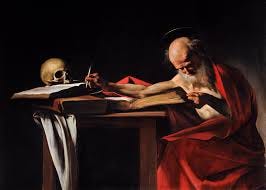
Dear reader, you may be surprised to learn that Catholics actually affirm this last view. We call it the sensus fidelium, Latin for the sense of the faithful. But this sense is going to be one that spans the whole Church, not only globally, but temporally as well. If we look back across the history of the Church, we will learn that the overwhelming majority of Christians held the 73 book canon to be the correct one. Christians in the early Church actually debated this list, but they all submitted their opinions to the Church's authority. Take St. Jerome, for instance, who had a rather low view of the deuterocanon. Nevertheless, out of obedience, he included it in his Vulgate edition of Scripture. A further problem with taking on this view for Protestants, though not for Catholics, is that different groups of Christians may disagree over the canon. If they do, which group really has the sense, and which group is heretical? If there is no central authority (which could be fallible or infallible), then the disagreement becomes impossible to settle. Both groups will claim the other is a group of heretics.
The problem with the Protestant approach to the canon is not, at its core, a lack of infallibility. The problem is, rather, a lack of authority as such. Even if one supposes that a fallible authority may give Christians a trustworthy canon, or even simply impose on them a call to obedience to a canon under God's authority, Protestant churches all lack reasonable historical claims to such authority, and as such ought to submit to the authority of the Apostolic Churches regarding the question of the canon of Scripture.
Not that anything new is revealed, but that revelation is clarified and refined through the action of the Church.