
Creation or Evolution?
A debate more complex than you may think

The debate regarding the origin of species has raged on ever since Darwin published his book of the same name in the latter half of the 19th century. Today, most people take it as a given that all modern species, including human beings, originated through an evolutionary process that governs adaptation in living organisms. Creationists - those who believe that God created each species or kind of animal directly - are maligned as fringe and cult-like, and as such, their arguments in favor of the creative explanation for the origin of species, both scientific and metaphysical, are often dismissed out of hand. But the debate is more complex than simple adherence to the doctrine that all species have their origin in mere adaptation on the one hand, or that adaptation plays no significant role in speciation on the other.
In the first place, the questions of irreducible complexity and intelligent design deserve real scientific exploration, since so many biological structures appear to function with purpose, and that only as a whole. The eye is the classic example of an irreducibly complex organ, though Richard Dawkins offers an explanation of how the eye might have developed through adaptation. It is a good explanation, but it is limited in scope to the eye, while those who advance the theory of irreducibly complex organs think many organs work this way. More recent advances in microbiology even uncover the very complex functions which occur inside the cell, which seem irreducible in their complexity as functions. Even if one does not think that such organs and processes are irreducibly complex, one still must investigate the hypothesis in order to be an honest scientist, but it is not an hypothesis which the scientific community is willing to explore.
Furthermore, Christians must accept the literal sense of Scripture as true. The literal sense refers to the point the sacred author is actually trying to make with the written word, and this is not always a physical or historical account of things. When the psalmist writes “Out of the depths have I cried unto thee, O Lord” (Ps 130:1), we are not to imagine that he is physically situated at the bottom of the sea. We understand that the psalm is a poem, and that the language employed by the psalmist is poetic, not historical or scientific. Nevertheless, there is a literal sense to the passage, which corresponds to the sacred author’s intention (and the Holy Spirit’s) in composing poetry in this manner and with these words. Likewise, it is wrong to say that Genesis 1-3 is not literally true, even if we do not hold that the author is giving a detailed and precise account of history.1
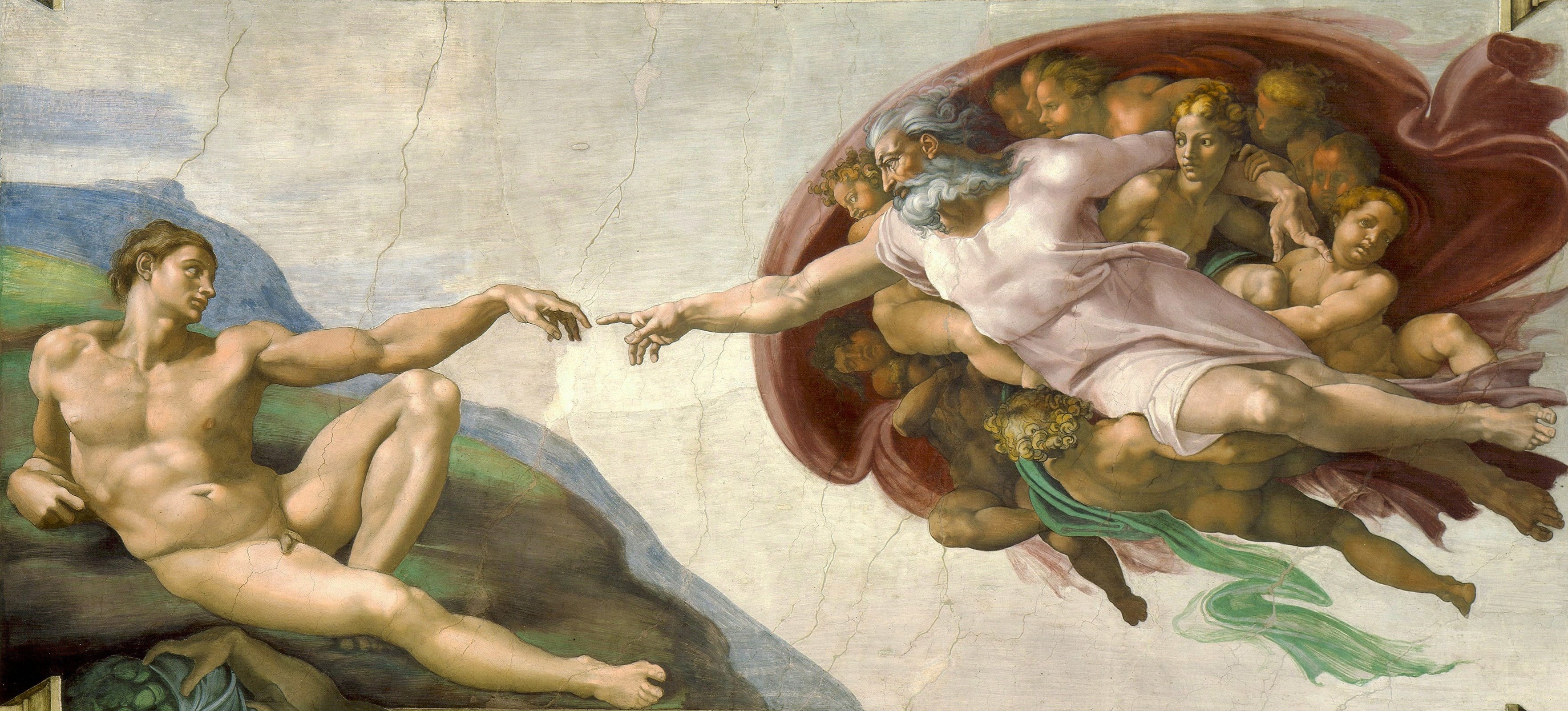
But the historical accuracy of the creation account broadly is of secondary concern, since neither position is discordant with the Tradition of the Church. Of prime importance, really, is the question of the origin of man, since the modern theory of man’s origin does conflict in some ways with what the Church teaches. There are questions regarding the origin both of Adam’s body and of Eve’s, their souls, and whether they are two historical parents or whether they are mere signs for the first human community.
The non-authoritative but first response to the theory of evolution on the part of the Church was given by the Synod of Cologne in 1860. A document published by that synod, entitled De Homine, said the following:
Our first parents were created immediately by God. Therefore we declare that the opinion of those who do not fear to assert that this human being, man as regards his body, emerged finally from the spontaneous continuous change of imperfect nature to the more perfect, is clearly opposed to Sacred Scripture and to the Faith.2
The quotation here is saying that it is contrary both to Sacred Scripture and to the Catholic Faith to say that man’s body originated from natural processes. This would exclude evolution as a viable explanation for the origin of man, both his body and his soul. As will be shown, the authoritative response from the Church has been more nuanced, permitting discussion regarding evolution as a possible explanation for the origin of at least Adam’s body but, notably, not Eve’s. Regarding the soul, there is no room for discussion on its origin in Catholic circles.
The Pontifical Biblical Commission of 1904-1906 issued a number of declarations regarding what Catholics may and may not teach regarding the interpretation of Sacred Scripture, and this work was given ordinary papal magisterial authority by Pope St. Pius X. One question put forth to the commission3 asked whether certain fundamental questions of the faith may be questioned. Among these were the special creation of the first man, and the creation of the first woman from the first man. The commission answered in the negative: these doctrines may not be doubted by faithful Catholics. So, it must be held that God was involved in a direct and special manner in the creation of Adam and Eve, and, furthermore, that Eve is from Adam. But if Eve is created from Adam, she is either his descendant, which would involve Adam in an incestuous relation with his own daughter (not to mention the act of bestiality needed to conceive her; and all this before the first sin of mankind), or she was miraculously created from him by God. Catholics seem to be required to believe the latter. The miraculous creation of Eve from Adam was also taught plainly by Leo XIII in an earlier encyclical titled Arcanum Divinae, in paragraph 5.
Finally, in 1950, Pope Pius XII weighed in on a few of these relevant questions in his encyclical Humani Generis. In this encyclical, the Pope reaffirmed the Church’s perennial teaching that the souls of men and women are created directly by God, and that this also must be true of Adam and Eve. However, he opened theological debate regarding the origin of the first man’s body - whether it came about through descent from lesser creatures or was formed literally from the dust of the earth. The Pope did not say that Adam’s body did come about through evolution, and he did not even explicitly permit Catholics to hold in earnest that it did. Rather, he opened debate, and cautioned both sides of the debate against hasty conclusions.4
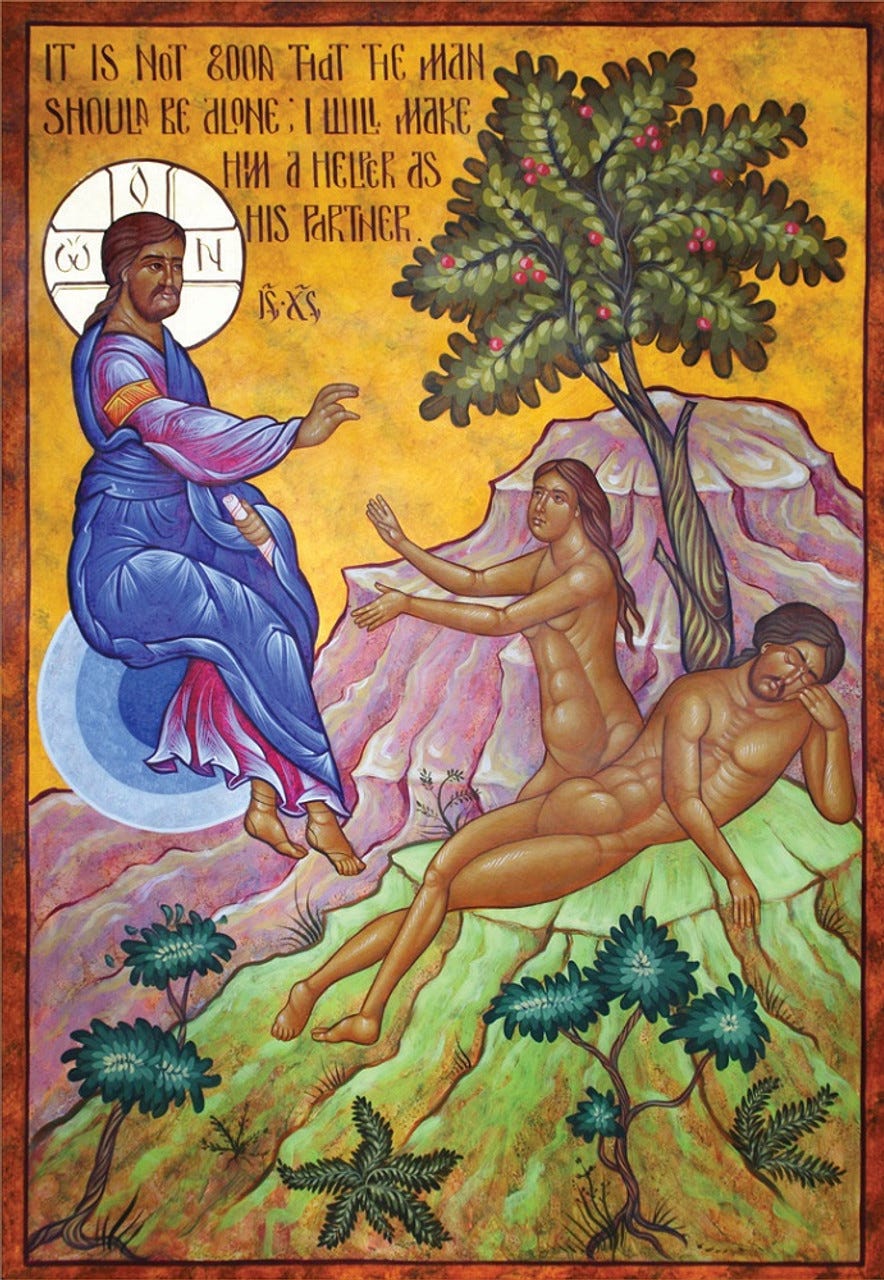
The Pope furthermore condemned polygenism, which is the notion that there were many first parents of the human race, rather than only two, on account of the issues that polygenism creates for the doctrine of original sin.5 On the other hand, some faithful Catholic theologians will try to argue that scientific advancements point to polygenism being possible without the destruction of the doctrine of original sin. This is because, in Pius XII’s day, polygenists believed human communities were spread out, whereas today they think there was one original human community. These theologians think that the original human community could have collectively committed original sin.
But polygenism seems to contradict a number of Church teachings. For instance, as stated above, She consistently teaches that Eve’s body was miraculously created from the side of Adam. If this is so, it is difficult to see how polygenism could be true. Perhaps multiple women came supernaturally from multiple men? But this seems strange. Furthermore, if we must hold to a miraculous creation of Eve’s body, what is the point of postulating that Adam’s body was merely naturally created through evolution? No one will be winning over any atheistic naturalists with such arguments, and it only serves to make the faith seem inconsistent, undermining the fittingness of God’s creative acts.
However, nothing in Church teaching prevents the evolution of lesser creatures, which are really only constituted in matter, anyway. The Catholic who holds that Adam and Eve’s bodies were specially created need not contradict all of evolutionary theory, just the specific part that postulates (without much definitive evidence) that mankind, too, evolved. That being said, the appeal of creationism to a traditional Catholic may be both that it seems to be the view that most Christians throughout all of history have held, and also that it better accords with the Thomistic thesis on substantial form.6 Old Earth creationism, too, may be appealing, especially to those in the Thomist tradition who won't deny the age of the Earth on account of legitimate advancements in the field of cosmology. Old Earth creationism helps us to make sense of the creation of forms across a wider span of history, and even accords better with certain data points in the fossil record than naturalistic evolutionary theory does. For instance, Old Earth creationism, the view that God created new kinds at discreet moments in history, better explains our observation of what is commonly called the Cambrian explosion. This is a seemingly short moment in the fossil record where the number of kinds of animals grew exponentially, without much discernible natural cause.
The complexity of the debate lies in the fact that the Church has not definitively ruled on this question of evolution. She has not said anything whatsoever regarding the origin of non-human species, and She has taught some things authoritatively regarding Adam and Eve from which we would reasonably draw conclusions contrary to the world's modern doctrine. Yet, many are tempted to follow the doctrine of the world because they will be maligned and stigmatized by the world if they reject its teachings. Was this not the fate of our Lord, who was literally stigmatized in His hands and feet because the world rejected and maligned Him for teaching the truth it did not want to hear? In all things, let us strive to imitate Him.
Catholics are indeed permitted to hold that Genesis 1-3 provides a precise account of history, but are not bound by the Church to say so.
Chaberek, Michael O.P., Catholicism and Evolution (Ohio: Angelico Press, 2015), 73
Humani Generis 36, 38
Ibid. 37
The discussion of evolution, creation, and substantial form is a topic perhaps best explored in a future post.