
On Indulgences
An Ancient Christian Practice

The Body of Christ is One, and as One, Her members are able to aid one another. We, the members of that Body, may aid one another not only in corporeal, but also in spiritual matters. One method of aid we may supply to other members of the Body is by making use of indulgences granted by the Church.
In the Early Church, Christians who had committed mortal sins were required to undergo a period of penance in order to be fully restored to communion with the Church. Christians who had been placed in this state of penance would ask the soon-to-be martyrs to offer their suffering in the Roman arena on behalf of the penitents. In this way, the martyrs imitated Christ, Who offered His death for the remission of sins. The martyrs could sign a document which could be presented to a bishop, and the penitent would be restored to full communion with the Church. While the Sacrament of Confession removed the eternal debt due to sin from a penitent, the indulgence gained by the martyr wiped away the temporal debt.
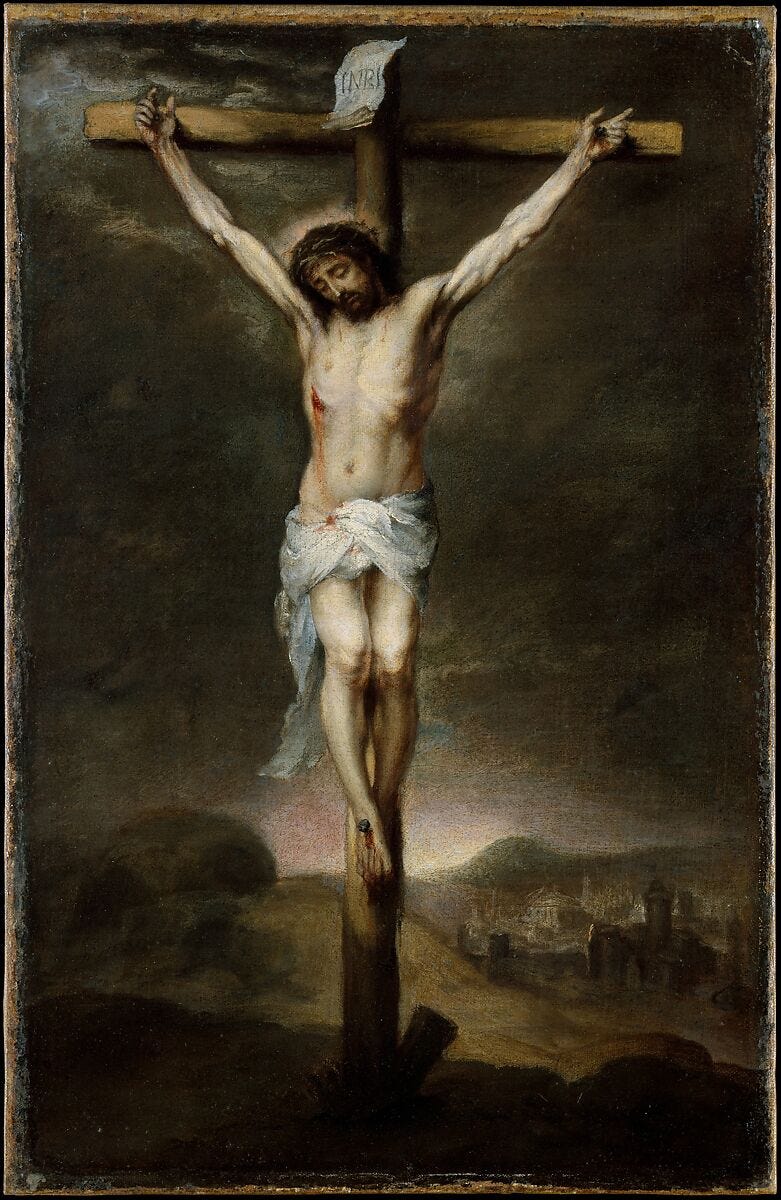
This tradition, of course, evolved as the Church grew to be first tolerated, and later accepted and adopted by the civil authorities. When martyrdom was no longer a looming threat over the faithful in Europe, indulgent penances took on a more formalized character in the Church, under the forms of partial and plenary indulgence. It was also tied to the doctrine of Purgatory, as the Church’s understanding of the afterlife developed.1 Both forms of indulgence offer remittance of the temporal debt of sin, but never the eternal debt of sin. As the name implies, a partial indulgence remits part of the temporal debt, while a plenary indulgence remits the full temporal debt of the one to benefit from the indulgence. The Church’s authority to remit temporal debt is rooted in Her authority of binding and loosing (cf. Matthew 18:18).
Every indulgence is attached to a spiritual or corporeal work. In the Middle Ages, indulgences attached to corporeal works, like donating material resources to a just and charitable cause, were far more common than they are today. Historically, Protestant rhetoricians twisted the Church’s practice of indulgences to make it seem as though Catholics believed they must buy their way into heaven. This was never the true sentiment of Catholics. Therefore, in the modern day, in order to avoid potential scandal, the Church tends to keep the works prescribed for indulgences to spiritual works only, such as praying a set of vocal prayers.
A plenary indulgence is only obtained when certain conditions are met beyond merely doing the attached work. These conditions include confession, receiving the Eucharist, and praying for the intentions of the Holy Father. Meanwhile, merely doing the work with the intention to obtain an indulgence is sufficient for obtaining a partial indulgence. Also, if one fails to meet the additional criteria for receiving a plenary indulgence, a partial indulgence is obtained instead.
The Church teaches that indulgences can be obtained either for the one doing the work or for a soul in Purgatory. When a soul in Purgatory receives the graces attached to a plenary indulgence, that soul immediately enters heaven, while souls on earth obtains remittance for the temporal debt of their past sins.

As Lent is fast approaching, I want to encourage my readers to consider adopting a seasonal practice of obtaining plenary indulgences for the souls in Purgatory. Personally, I often ask for the graces of the indulgence to be given to the soul in Purgatory to whom I have the greatest filial duty. This would be an ancestor of mine, whether I know who they are or not.
There are a number of opportunities to obtain plenary indulgences in Lent that are not available during the rest of the year. A common Lenten indulgence may be obtained on Fridays by praying a certain prayer before a crucifix:
Behold, O good and sweetest Jesus,
I cast myself upon my knees in Thy sight,
and with the most fervent desire of my soul
I pray and beseech Thee to impress upon my heart
lively sentiments of faith, hope and charity,
with true repentance for my sins
and a most firm desire of amendment.
Whilst with deep affection and grief of soul
I consider within myself and mentally contemplate
Thy five most precious wounds,
having before mine eyes that which David,
the prophet, long ago spoke concerning Thee,
“They have pierced My hands and My feet,
they have numbered all My bones.”
Amen.
The other requirements for obtaining a plenary indulgence are
To receive the Eucharist, which can be done within about twenty days either before or after the work is done
To receive absolution in the Sacrament of Confession, which can also be done about twenty days before or after the work is done
To be in a state of grace at the time the work is done
To pray for the Holy Father’s intentions (either praying his given intentions for the month or simply saying an Our Father and a Hail Mary for his intentions)
To be completely detached from all sin.
The requirement to receive the Eucharist is one to one, meaning that every plenary indulgence obtained needs to correspond to one reception of the Eucharist. It is easiest to receive the Eucharist on the day the the work is done, but, as many people may be unable to attend daily Mass, we have the option to intend our reception at Sunday Mass for the sake of an indulgence later or earlier in the week. On the other hand, one Confession can cover multiple indulgences.
The final requirement, to be completely detached from all sin, is the most difficult of all. If you do not believe you will be able to satisfy this requirement, as I know I often cannot, take heart, for your efforts will not be wasted, and a partial indulgence will be obtained, remitting part of your temporal debt or part of the temporal debt of the soul in purgatory for whom you pray.
Catholic Doctrine never changes; rather, it develops. For example, the Church has always believed in doctrines like the existence of purgatory, but at some point She grows in a deeper understanding of the doctrines.